


Root Canal Therapy
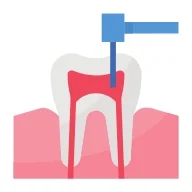
Generations Dental Care offers this treatment when a tooth has suffered an extensive amount of damage and can’t be remedied by simpler techniques. Our team will assess your particular situation and guide you through the entire process.
Root canal therapy is needed when the nerve of a tooth is affected by decay, infection or trauma.
In order to save the tooth, the pulp (the living tissue inside the tooth), nerves, bacteria, and any decay are removed and the resulting space is filled with special, medicated, dental materials, which restore the tooth to its full function.
Root canal treatment is highly successful and usually lasts a lifetime, although on occasion, a tooth will have to be retreated due to new infections.
Signs and symptoms for possible root canal therapy:
- An abscess (or pimple) on the gums.
- Sensitivity to hot and cold.
- Severe toothache pain.
- Sometimes no symptoms are present.
- Swelling and/or tenderness.
Reasons for root canal therapy:
- Decay has reached the tooth pulp (the living tissue inside the tooth).
- Infection or abscess have developed inside the tooth or at the root tip.
- Injury or trauma to the tooth.
What does root canal therapy involve?
While the tooth is numb, a rubber dam (a sheet of rubber) will be placed around the tooth to keep it dry and free of saliva. An access opening is made on top of the tooth and a series of root canal files are placed into the opening, one at a time, removing the pulp, nerve tissue, and bacteria. If tooth decay is present, it will also be removed with special dental instruments.
Once the tooth is thoroughly cleaned, it will be sealed with either a permanent filling or, if additional appointments are needed, a temporary filling will be placed.
At the next appointment, usually a week later, the roots and the inside cavity of the tooth will be filled and sealed with special dental materials. A filling will be placed to cover the opening on top of the tooth.
After treatment, your tooth may still be sensitive, but this will subside as the inflammation diminishes and the tooth has healed.
You will be given care instructions after each appointment. Good oral hygiene practices and regular dental visits will aid in the life of your root canal treatment.